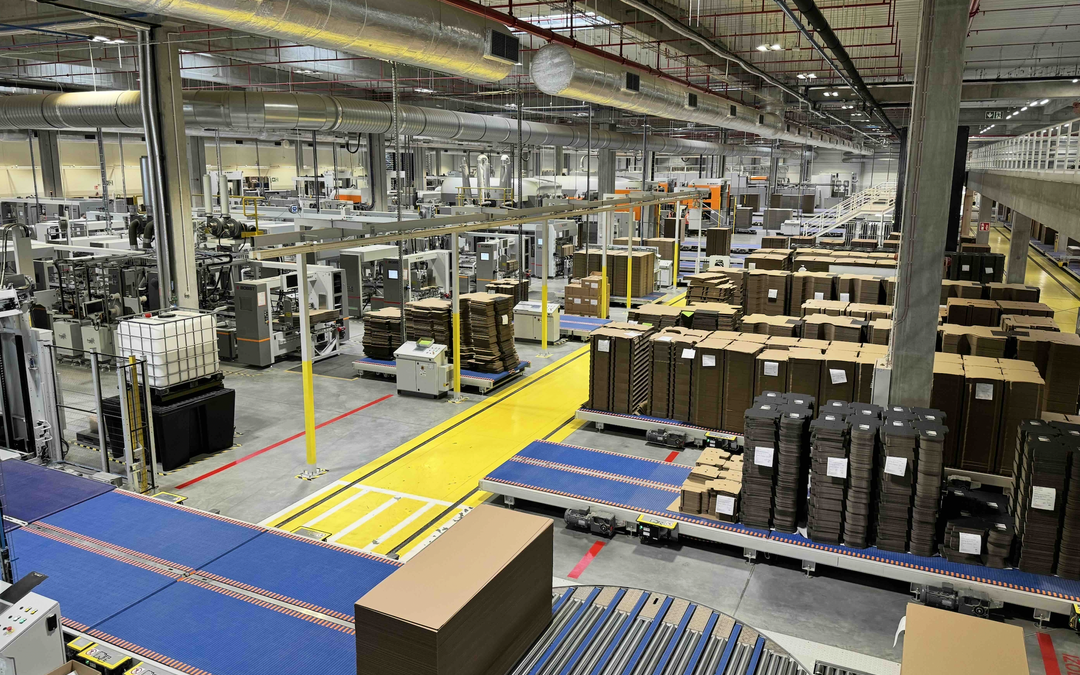
In corrugated manufacturing, the next generation of automation will not be defined by a single machine, conveyor or software package. The competitive advantage will come from how effectively those technologies work together.
Founded in late 2024, Twin Valley Controls is a young company with an experienced team and an approach built around solving the increasingly complex material-flow, controls, software and plant-integration challenges facing today’s corrugated manufacturers.
The company’s philosophy is straightforward: find the problem first, then engineer the solution.
Charles Heistand, founder of Twin Valley Controls, was an electrical engineer whose 14-year manufacturing career has crossed several industries before arriving in corrugated. His experience includes automotive manufacturing, product distribution, custom machine design and construction, and ultimately corrugated manufacturing, where he served as electrical controls engineering manager for a North American corrugated material-handling manufacturer.
That varied background is an important part of Twin Valley Controls’ approach today.
“Sometimes the solution to a corrugated problem comes from outside the corrugated industry,” Heistand says. “If you have only ever worked in corrugated, you may know the industry extremely well, but you may not have been exposed to the technologies or processes being used to solve similar problems elsewhere.”

Charles Heistand
That perspective is reflected in the company’s broader engineering offering, which includes factory automation and project planning, mechanical engineering, electrical and controls engineering, software engineering, and plant-floor implementation and integration
A Growing Network of Partnerships
Twin Valley Controls describes itself as an automation integration specialist focused on tailoring solutions to each customer’s unique challenges. That is the thinking behind its growing network of technology partnerships, including with Westfalia Technologies USA, Kennedy Technologies Corporation and N.E. Engineering.
The partnership with York, Pennsylvania based Westfalia Technologies USA added a crucial element: vertical storage.
Twin Valley Controls and Westfalia target vertical automated storage applications for work-in-process (WIP), finished goods and paper rolls for corrugated manufacturers.
A vertical storage concept is particularly compelling in a plant where floor space is increasingly expensive and production volumes continue to rise. However, a properly engineered vertical warehouse can become an active component of the plant’s material-flow strategy.
Westfalia brings over three decades of experience in automated storage, warehouse design and optimization, while Twin Valley Controls brings corrugated-specific knowledge and the ability to connect that storage environment to the rest of the manufacturing operation.
Through this partnership, the primary question around storage evolves from How much can we store? to How should material move through the plant, and how can storage become part of that process?
That is where the partnership with Dimondale, Michigan based Kennedy Technologies Corporation becomes critical. For Twin Valley Controls, this partnership bridges an important gap between physical automation and the information driving the factory.

The Westfalia vertical storage system.
Kennedy Technologies brings nearly three decades of experience in software development, IT consulting and, particularly, corrugated manufacturing. Its experience includes shop-floor integration and corrugated manufacturing support.
Its proprietary iFAS — Intelligent Factory Automation System — provides the business-system and shop-floor integration layer needed to connect material handling with production planning and manufacturing information. The system is designed to provide greater visibility into plant operations while connecting the information driving production with the physical movement of material.
The third piece of the partnership is that with N.E. Engineering, headquartered in Lucca, Italy, in what has become one of the world’s most concentrated regions for paper and corrugated technology — often referred to as the “Silicon Valley of paper.” Especially having been founded alongside the growth of Fosber corrugators, N.E. Engineering roots run deep in the modern Italian corrugated equipment industry.
With nearly 30 years of experience, the company has earned a reputation for developing material-handling solutions backed by engineering-focused design. Today, N.E. Engineering is looking beyond simply automating individual processes and toward what the connected, intelligent corrugated factory will require in the future.
For Twin Valley Controls, the partnership with N.E. Engineering creates a unique combination: American corrugated plant knowledge, European material-handling engineering and American warehouse automation technology.
Creating A Connected System
Many box plant owners build successful operations by combining equipment from a variety of different manufacturers. Heistand argues there is real opportunity even beyond this strategy. For him, the goal is to create a system that thinks about the plant as a whole.
A corrugated operation cannot afford to treat the corrugator, WIP storage, converting machines, finished goods warehouse, shipping area and business systems as independent islands. Production information needs to move with the material, and reliable communication between systems and departments is essential. Material handling needs to respond to production requirements. Storage needs to support scheduling. And the data generated by every one of those processes needs to become useful information for plant personnel.
That is the foundation of the Industry 4.0 and Industry 5.0 conversations now taking place throughout the manufacturing industry.
Twin Valley Controls’ approach focuses on real-time machine monitoring, predictive analysis, connected end-to-end visibility and greater interaction between humans and machines. The company sees artificial intelligence and advanced analytics as the next logical step — not as replacements for experienced manufacturing personnel, but as tools that empower those people to make more informed decisions.
A Different Way Of Looking At Automation
Rather than beginning with a product and searching for an application, Twin Valley Controls begins with understanding each unique manufacturing challenge and builds the appropriate solution around it. The company’s services span PLC programming, HMI integration, electrical design, mechanical design, software engineering, plant-floor integration, automation audits, troubleshooting, obsolescence planning and factory optimization.
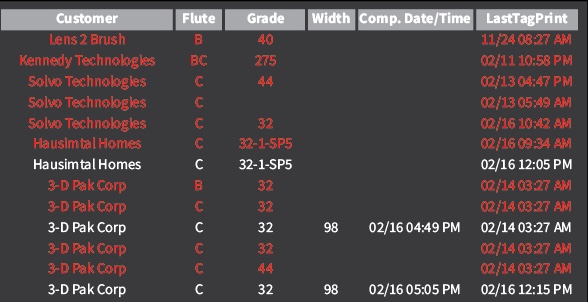
The Kennedy Technologies Corporation marquee screen.
The combined skill sets of these three partnerships provide corrugated manufacturers with the resources to solve some of their biggest challenges: space, labor, material flow, information and system integration.
Westfalia brings vertical storage and automated warehouse expertise. Kennedy Technologies brings corrugated business systems and shop-floor integration. N.E. Engineering brings advanced corrugated material-handling technology. Twin Valley Controls provides the engineering and integration perspective intended to bring those technologies together for the North American corrugated market.
For a company founded only in late 2024, it is an ambitious position to take. But the depth of experience behind Twin Valley Controls — combined with the capabilities of its three strategic partners — gives the company a foundation that extends far beyond its age.
And in an increasingly automated corrugated industry, the companies that can turn that philosophy into practical, integrated solutions may ultimately be the ones helping define what the factory of the future looks like.
As Heistand puts it, “A satisfied customer is the best business strategy of all.”