In a recent announcement from Cicero, Illinois based TRG Packaging and Display Solutions (previously known as The Royal Group), president and CEO Kevin Miller explained how centralized digital preprint could give a century-old packaging business a more responsive future.
A snack goes viral. Millions watch, demand surges, and a brand discovers that marketing success can become a supply-chain problem. The packaging supplier must respond before enthusiasm fades. For Miller, this is the test of modern corrugated manufacturing: a box must protect a product, but the business making it must also help its customer capture an opportunity.
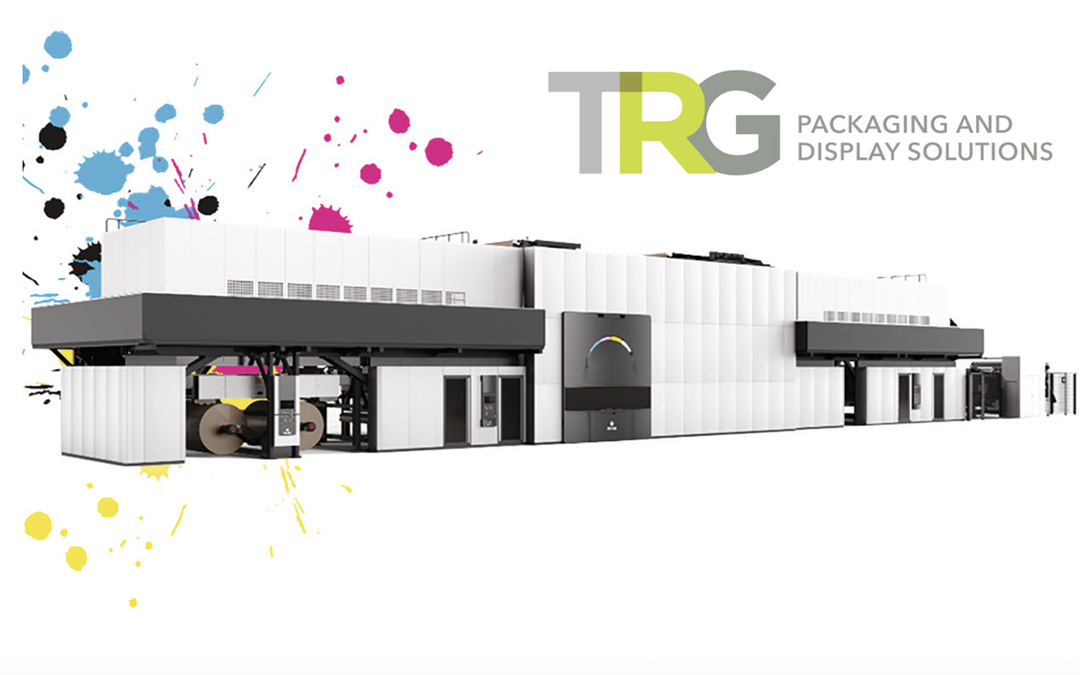
TRG’s answer was to invest in a BHS Jetliner Xceed industrial digital preprint system, the first installation of its kind in the United States. By moving printing upstream, the company aims to combine centralized graphics capability with local manufacturing responsiveness.
TRG’s network strategy seeks to make that proposition available more widely. Rather than installing another digital press at each selected site, it has chosen a centralized preprint model in Indianapolis. Printed rolls can travel to corrugator-equipped plants; printed sheets can supply other operations. Miller also describes the option of producing sheets in Indianapolis, potentially removing freight stages. For local plants, this enhances the capabilities they can offer. For example, an operation accustomed to two- or three-color industrial packaging can gain access to sophisticated digital graphics without replicating the central printing investment.
The capital implications are equally significant. Printing upstream may reduce the need to purchase additional multi-color converting equipment at individual sites. It can simplify downstream work, reduce print setup demands and free capacity on existing machinery. These are opportunities rather than universal, measured results: the gains will depend on the work being processed.
TRG’s longstanding relationship with BHS Corrugated helped support a decision involving pioneering technology. Miller acknowledges startup challenges and credits the supplier with helping resolve them. The relationship illustrates a broader requirement of industrial adoption: both parties must be willing to work through difficulties after the purchasing decision has been made.
TRG, backed by the Schwarz family and Schwarz Partners, traces its history back more than a century, now boasting a network of 23 corrugated manufacturing locations and more than 50 physical sites when fulfillment operations and other facilities are included.
Additional details will be included in a future issue of Board Converting News.