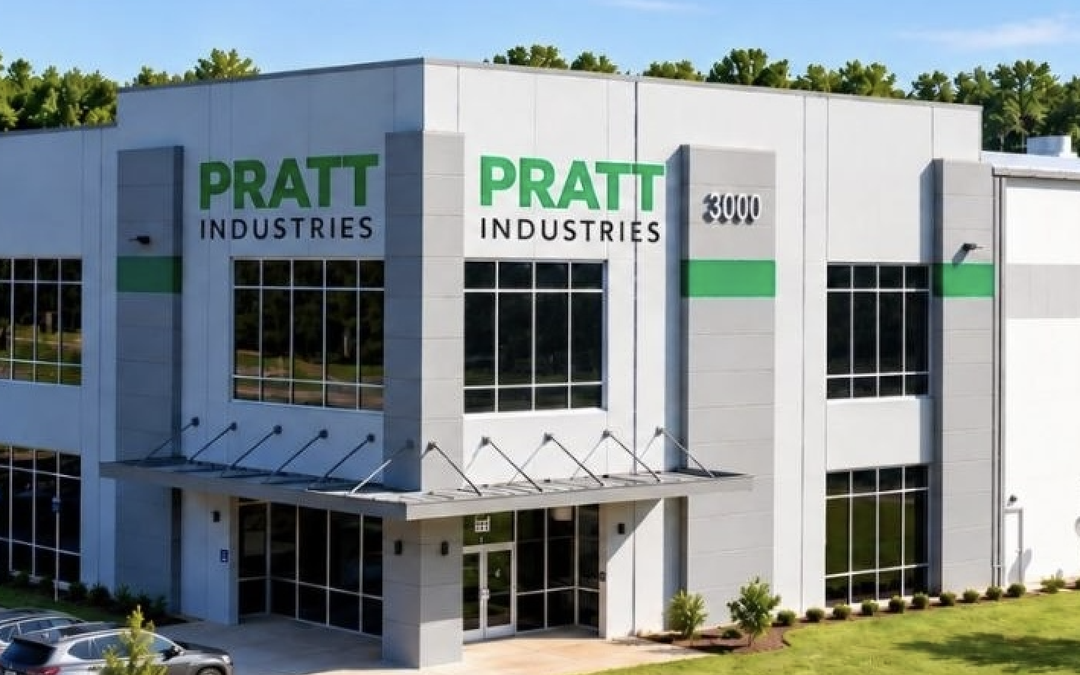
Earlier this year, Pratt Industries announced its plans to invest in a new corrugated plant in Bondurant, Iowa. According to corruga.expert, Bondurant represents more than another plant announcement. Corrugated packaging is freight-sensitive, and Iowa is already adding new box capacity. A heavily equipped Pratt site could matter through shorter freight lanes, faster service, new converting capacity and tighter competition for skilled production labor.
IEDA approved assistance on September 18, 2026 through the Business Incentives for Growth program, including $1.8 million in state tax credits. Twenty positions are tied to a qualifying wage of $35.11 per hour, or about $73,000 a year at 2,080 hours.
The capital-per-job figures are analytical calculations from public data, not company productivity metrics. They do not establish automation level, rated output or return on capital. The real operational question is what more than $80 million of machinery will produce — and how much competitive pressure that output could add once the Bondurant line starts running.
Why Bondurant Matters For Corrugated
Corrugated packaging is freight-sensitive: empty boxes are bulky, transport cost can consume margin quickly, and local service often matters as much as nominal machine speed.
Bondurant sits in the Des Moines metro with access to U.S. Highway 65 and the I-80/I-35 corridor. Iowa’s economic-development material says roughly 30 of the 100 largest U.S. food manufacturers have operations in the state, alongside major food-processing and agricultural activity.
That does not make those companies Pratt customers — no Bondurant customer list has been disclosed. But it explains the location logic: a local corrugated plant can compete on freight, response time, inventory and service as well as price.
Iowa As A Competitive Corrugated Market
Pratt will not enter an empty field. International Paper is building a new Waterloo, Iowa corrugated box plant with more than $250 million of announced project investment. IP calls it its largest U.S. greenfield box plant and says operations are targeted for the fourth quarter of 2026, with the protein segment a core focus. At more than $250 million, that project carries over 2.5 times Bondurant’s announced capital.
Packaging Corporation of America also lists a full-line plant in Marshalltown and a sheet plant in Conrad. Those public location records do not provide enough capacity data to calculate market share, but they do show that Pratt is entering an active corrugated manufacturing base rather than creating one from scratch.
For existing converters, the competitive effect may appear first in lead time, freight, service responsiveness and labor — before it appears in any published capacity figure.
What This Could Change For Midwest Box Plants
The biggest missing number remains capacity. Pratt has not disclosed Bondurant’s annual or hourly output, corrugator width, design speed, converting-line count, shift pattern or target customer segments. Without those figures, the amount of new corrugated capacity entering Iowa cannot yet be quantified responsibly.
Even before the first box ships, a local plant can shorten freight for customers it wins, raise expectations for lead time and inventory response, and intensify competition for experienced operators, maintenance technicians and salespeople.
For incumbent converters, the pressure may show up less in headline price than in total delivered cost: freight, reliability, print quality, design support and response when demand changes quickly.
A plant director watching the project should be asking three practical questions now: which major accounts sit inside a plausible Bondurant service radius, how current lead times and freight compare with a new local competitor, and whether key maintenance and production roles are becoming harder to retain.