
by len prazych
Fort Washington, Pennsylvania, based Amtech Software welcomed more than 240 attendees from across North America to the Amtech User Conference in Nashville, Tennessee, two weeks ago. Under the theme, “Compete Smarter, Operate Stronger,” the three-day event featured more than 80 breakout sessions, deep dives and a compelling panel discussion moderated by Amtech’s Michael Ochi, Director of Product Marketing.

Michael Ochi, Director of Product Marketing at Amtech Software, left, moderated a panel of industry thought leaders that featured Billy Medof, Executive Chair of Key Container and former president of Georgia-Pacific Corrugated; Christopher Anderson, CIO at Schwarz Partners; Chris Keslin, CTO at Welch Packaging; and Les Pickering, founder and principal consultant of Quadrant5 Consulting.
Comprising the industry panel were industry thought leaders Billy Medoff, Executive Chair of Key Container and former president of Georgia-Pacific Corrugated; Christopher Anderson, Chief Information Officer at Schwarz Partners, with approximately 40 plants in its network; Chris Keslin, Chief Technology Officer at Welch Packaging, with approximately 30 plants in its network; and Les Pickering, the founder and principal consultant of Quadrant5 Consulting. (Editor’s note: Questions and answers have been edited for length and clarity.)
Ochi: We wanted to bring these folks together and ask what successes they’ve seen and what hurdles they’ve overcome, whether it be workforce or otherwise. Let’s start by asking about some successes.
Medof: It’s no surprise that AI has been front and center. Dispersing AI development down to the lowest possible level seems to be a best practice, obviously subject to all the right security precautions and controls. But at the user level, AI is really enhancing productivity. I’ll give just one example. One thing that we’ve seen in our business is the ability to run ad hoc analyses. Things that would have taken an analyst, typically a very qualified analyst or somebody with a college degree and several years of business experience to run these types of analytics. Now these can be run at the user level, on the operations side, on the commercial side, on the sales and go-to-market side. The ability to run these analyses with the LLM of your choice, whether that’s ChatGPT or Quad or Gemini, it really doesn’t matter. For these purposes, all of them seem to be quite helpful and effective at running ad hoc analyses that are, frankly, astonishing me in their ability to identify pricing opportunities, margin improvement opportunities, labor savings opportunities, waste reduction opportunities, you name it.
I would just encourage everybody to just dive in and start playing around. It’s real low risk, real low downside, and the benefits that we’ve seen have been impressive.
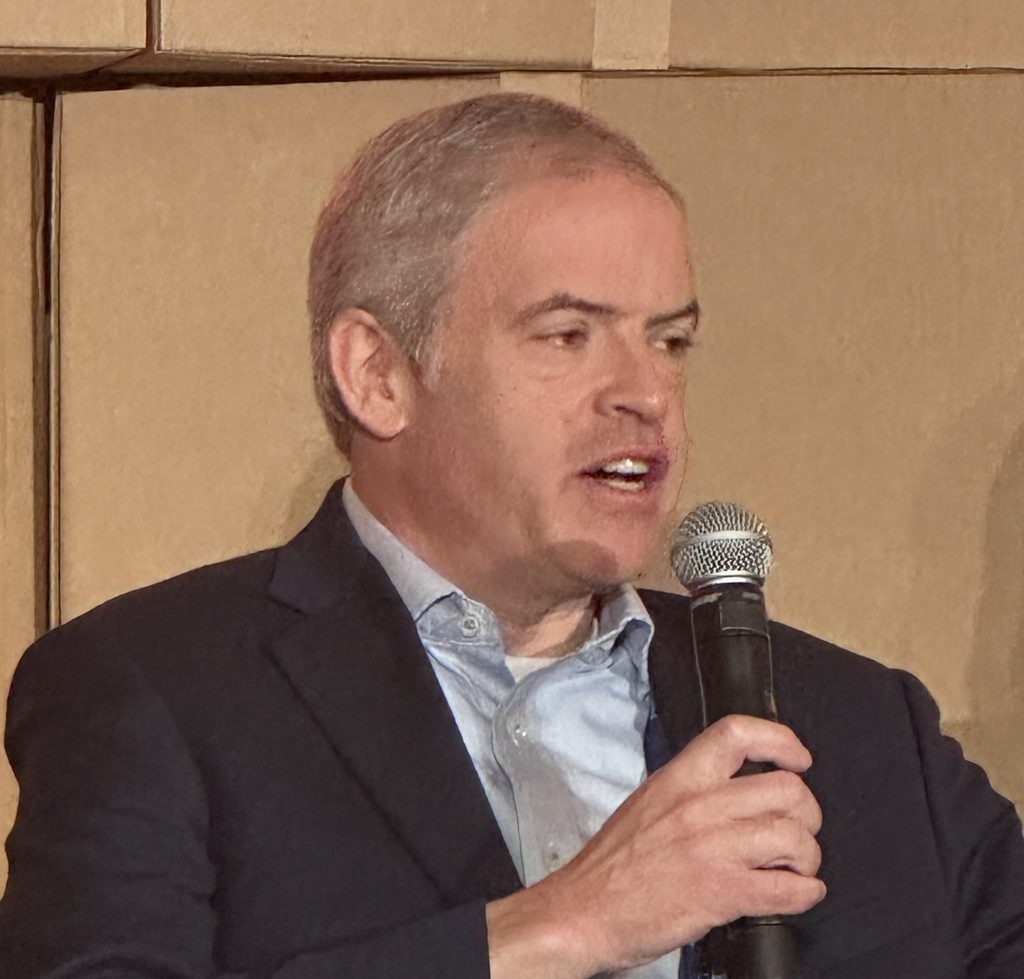
Billy Medof
Anderson: I’m on the technology side, and one of the things that we’ve done recently is partner with some of our sheet feeders on the corrugated side and we’ve gotten a lot more IoT data. And what’s fascinating to me is it’s not a new thing. This stuff has been around for a while, but the reason I say that’s a success for us is my IT team, and a lot of the teams, is that they want to participate. You get into IT because you want to solve problems, and sometimes it’s really hard sometimes to see problems out on the plant floor and not be able to have an impact.
It was a win because sometimes in operations you get so busy fulfilling the daily orders it’s difficult to take a step back and look through the lens of innovation to do things differently, being willing to change and learn. Hopefully we can capitalize on that.
Keslin: I think the one thing that stands out for me is watching our team use IT to teach themselves and gain confidence to do things that they had never done before. I’ve watched our IT team go from not really understanding EDI or having to get specialized people to do EDI or just a hard process to all of a sudden it’s ‘Hey, we need to do EDI implementation and let’s fire this up and oh my gosh, watch how it just takes off and it shows me how to do it and oh look, it already documented everything.’ And when it’s all done, there’s a perfect log and record of it and then when the next guy comes along, it’s already there. So just taking away all of that busy work that’s just necessary to do it right and still let them move forward and be excited, that’s a big win that I’ve seen within our team.

Chris Keslin
Pickering: The greatest implementation I’ve seen is at the senior managers level when we’re having these huge meetings with 16, 18, 20 people. The meetings are all being recorded and within 15 minutes of coming out of the C-suite, AI has composed everything that we were talking about, made a summary level and action points before we even get back to the office. Everything’s compiled quickly and efficiently. The speed of that is incredible and that has been done at no cost, which is absolutely fantastic.
Ochi: Can any of you can share a risk that your team has been able to mitigate in the last year and what was really key to making progress against it?
Anderson: When we think of risk, we think of availability and security, not even necessarily in that order. Security is always top of mind. Some of the things we’ve been doing around risk management is really around cybersecurity and user education. We’re really trying to find a way to connect with our end users and make them understand the responsibility that they have to make the right choices every day. The bad guys are out there. It’s a business for them and they take it seriously. It’s an arms race, so anything we can do to stay on the defense and educate the users is good. We’ve been spending a lot of time getting up to speed, doing specific employee sessions, even bringing in the FBI.
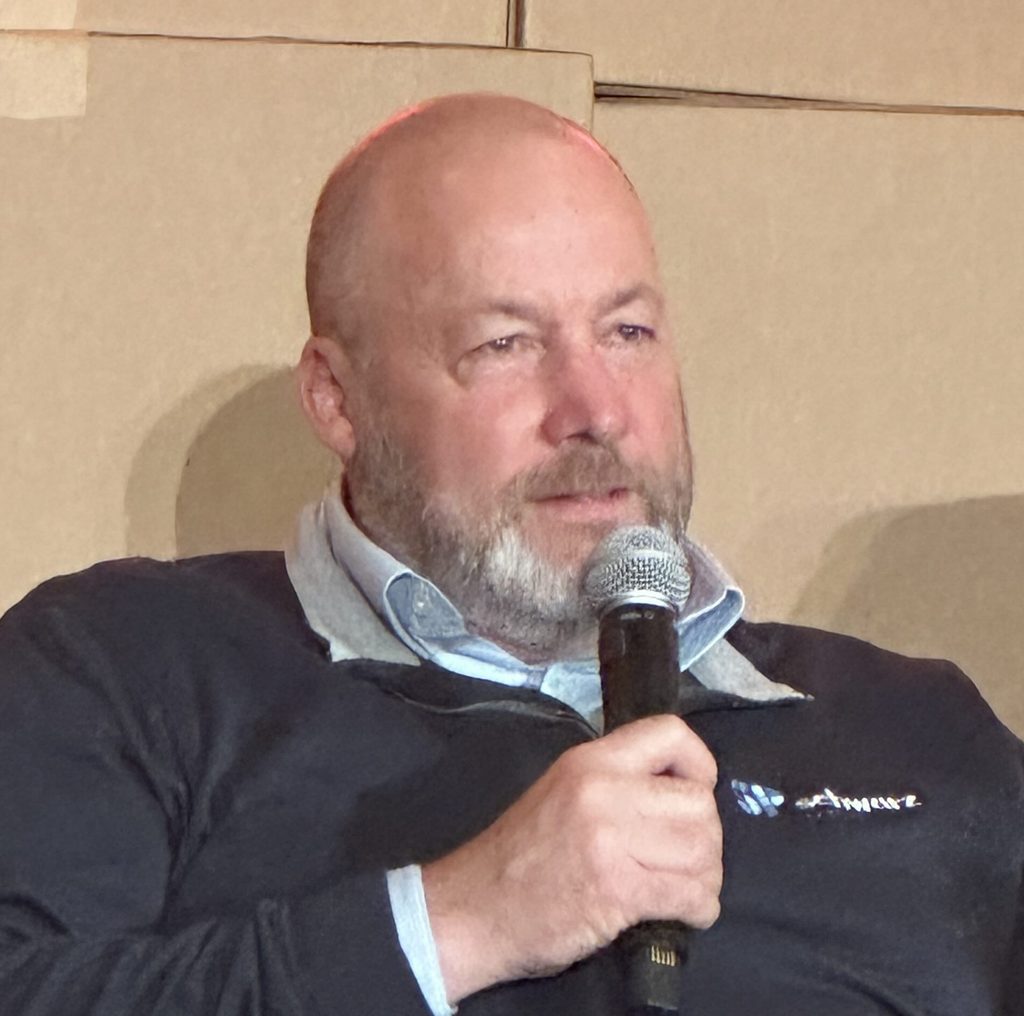
Christopher Anderson
Medof: We’ve been very focused on upping our game around safety over the last eight months, and I think anybody involved in the business of safety knows that it’s a continuous journey. Where we’ve really upped our game in the last months is focusing on behavioral-based safety. Things that are very tangible, like engineer, hazard reduction and engineered controls, those are very easy to understand and they’re very tangible by their very nature.
Behavioral-based safety, on the other hand, building a culture of awareness of safety all the way down to the line operator level, is very challenging and it requires a real cultural emphasis, cultural shift and constant work and diligence.
Ochi: Les, I know we’ve spoken in the past about some of the standard work you bring to the floor. Can you talk about how that may be an extension of the safety and kind of behavioral changes to help mitigate risk?
Pickering: I had a conversation in Canada a few years ago where we talked about AI security and how hard it is now to break into companies. So, if I wanted to break into one of your companies, what I would do is I would sprinkle a dozen USB drives on the car park [parking lot]. Now just think about that for a moment. I’m going to get inside the company. Somebody’s going to plug that USB drive in and as soon as they do, you’re in! The moral of this story is you need to also have a great policy about not being broken into from the outside. You need to have a great policy about plugging drives into your network internally. Something to think about.
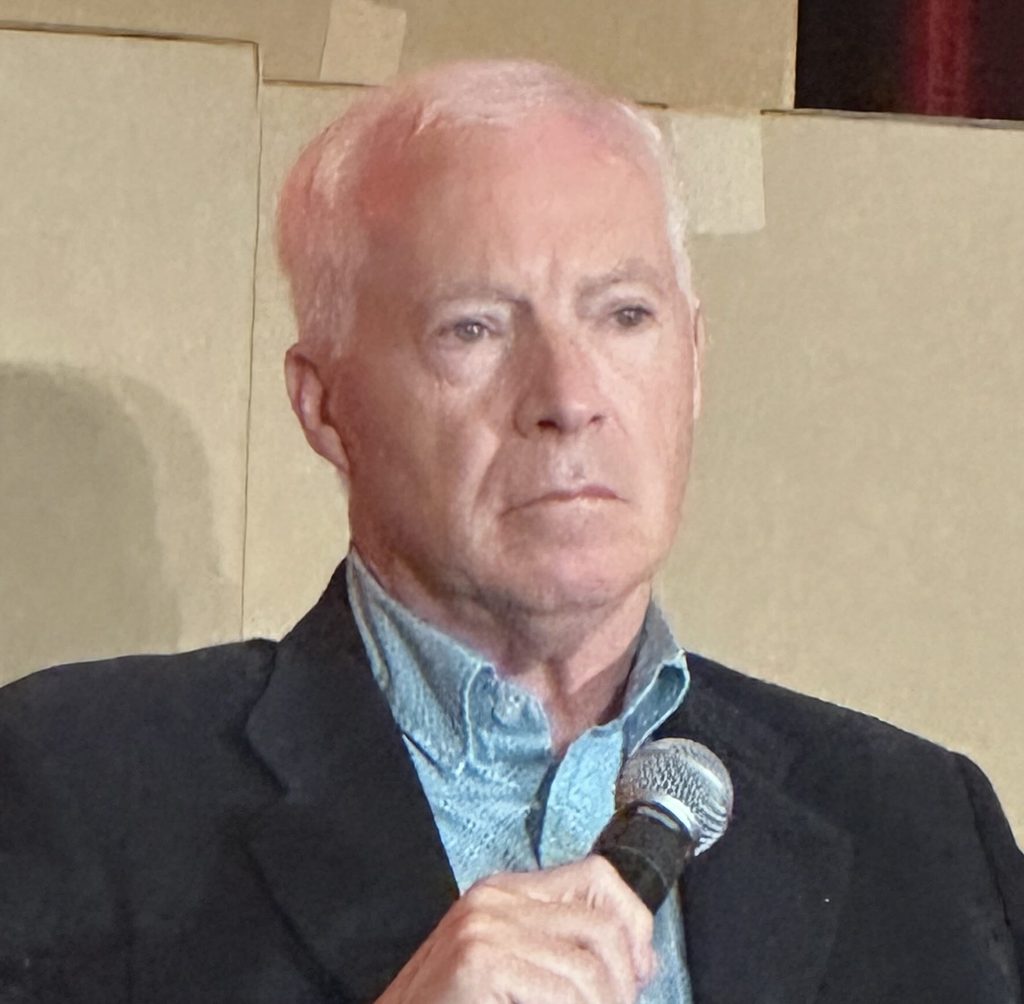
Les Pickering
Anderson: One of the things that really grabbed my attention was if we had a recordable incident in any one of our plants, everybody from a plant manager and above had to get on a call, walk through the entire process, understand how it happened, and then go through how we’re going to mitigate it. At first, I thought that was an incredible amount of resources to pour into one meeting. For 30 minutes, we had to go through this. We had to understand it. We had to figure out how do we disseminate that out to the rest of our team. That really struck to me how important safety was in our organization.
Ochi: I want to follow up on that on culture and the workforce challenge that the industry is facing. Chris, would you mind sharing how Welch is bringing in a new generation and looking at culture and education.
Keslin: We have a program called Early Career Professionals–internally we just call it ECP–and every semester when there’s a new class of college graduates we’ll agree to hire somewhere between five and seven grads across all majors. For example, one of our ECPs got his degree in computer science but he started in our program with box basics, then he was out on the floor for at least three to six months doing the job rotating through running a flexo, doing hand assembly, working with the schedulers and really understanding how the box plant works. The overall goal is to try to bring up that knowledge from the core. Of the last five classes we’ve run, we’ only lost two individuals, so for the most part, they’re sticking with it, the program is working and I’m absolutely thrilled.
Ochi: Billy, you shared some great advice about bringing young talent in that are coming out of high school and college. Can you repeat that?
Medof: Sure. For what feels like almost 20 years, we’ve been in a fraught employment environment. It’s just hard to find young people who are interested in working the kinds of jobs that we have in the corrugated and folding carton industries. That said, I do believe the tide is turning to an extent. There is a lot more positive momentum and energy out there about the value of manual work, especially with the threat of Artificial Intelligence. I think all of us have a story of someone we know who is just doing exceptionally well in the trades, be that HVAC or plumbing or electrical. So I do think the tide is shifting and it will continue to shift in our favor and it’s up to us to capture that.
Ochi: Let’s shift to AI specifically. So as AI is expanding, we’ve talked about some of the opportunities that we’ve seen, some of the wins. What are your leaders thinking and what are you considering before putting AI into people’s hands?
Anderson: The I in IT stands for information, right? We focus on the technology and we forget the information part. And really, from an IT perspective, we’re just stewards of the business’s data, right? We’re trying to present it in a way so they can make informed decisions to operate their business the best that they can. We’ve got to keep the data available, secure, and accurate. My point is that when IT is dictating what the business should or should not do with the data, I think we’re wrong. So, we need to develop the partnerships with the business, get them to understand and honestly recognize that it’s their data, they own it.
Keslin: When I first came into Welch, I had an open landscape where AI hadn’t really been exposed to the general workforce yet. I just kind of took a step back and thought about how I could get this tool in the hands of people with the industry knowledge in a way it’s consumable, usable, and safe for them. How could they harvest that information, then take that down to the next level and be able to provide it out to the consumers who benefit from that expertise? Then, how do we codify it into an application, something that’s repeatable, something that can be governed, and then we can start rolling out? What is the right tool and how do you get it into their hands? How do you learn from it and secure it? That’s been a huge topic internally for us. We’re working at it every day.
Ochi: From a business side, Billy, what are your recommendations on working with the information and technology people on a level of governance that satisfies all parties?
Medof: I’ll propose a thought experiment. Imagine it’s 35 years ago and you’re making the decision whether to grant email access to the administrative team in your business. So, 35 years ago email’s scary. So let’s not do it. Let’s not grant email access to any of our employees in the business at all. Fast forward 35 years and it’s inconceivable that any of us would lead a business where employees do not have email access. We would probably go out of business without email access.
I look at agentic AI similarly, like we’re the equivalent of 35 years ago with email. That’s kind of where we are with agentic AI. And what I mean by agentic AI are true agents that are enabled and empowered and authorized to go out and perform tasks, that are authorized to scan through emails, shipping systems and bills of lading, to then send automatic notices to customers. For me, the things Agentic AI can do is a little scary. I mean, personally, I’m not yet allowing an agent to crawl through my emails.
Ochi: What does plant leadership and the whole team sometimes underestimate about bringing new technology, whether it’s AI or physical equipment. Also, what does IT sometimes underestimate about running the plant?
Anderson: It’s all about managing change. In our IT department, we’re lucky enough to have a lot of people who’ve worked on the plant floor and that’s a benefit. However, it may also make people very resistant to change the status quo. Managing change getting is about people excited about what the result is, creating an understanding an environment that they want to change, or at least that they’re less resistant to change, then I think you have an opportunity to get a lot of wonderful things done.
Keslin: We just rolled out these tools to all these employees that have just gone, ‘Oh my gosh, where has this been all my life? I just built the perfect dashboard for myself! It does exactly what I want! And then when my computer’s off, it’s still going to keep working!’ Being able to functionally use that prototype every day is saving a ton of time. Now we’re going to have to industrialize this. We’re going to have to be able to make it so that IT can take it over, so it can be supported and governed. It follows all of our data standards. Now it’s helping to navigate that large gap between ‘It’s working now, so why isn’t this ready to go next week,’ which is a really tough hill to climb. The question is, how do you make sure that this is scalable?
Pickering: We build structures around the equipment from tubes and connectors. We don’t buy things like that because catalog engineering doesn’t give you advantage over the competition. Anybody can buy it. So we build everything out of tubes and connectors. And at one time we had to buy this software schedule. We had to learn the software. We just point it to the website. Here’s the catalog materials and the overall size. And the AI makes the structure and creates the building materials within 25 minutes. But getting IT to be comfortable with that was difficult. And I think it’s a learning point for IT as welL, a new frontier.
Anderson: One thing that sticks out to me is the question of whether your IT leadership is an order taker or a vision maker. And I think most folks in the plant will view IT as you should be an order taker. If you bring in some software application, you need to configure the heck out of it to ensure it fits my process.
I would also say that I favor IT as the vision maker. I think more often than not we would do better in our businesses to reconfigure our processes versus reconfigure our technology.
Ochi: Christopher, this June, the Royal Group, which is part of Schwarz Partners, announced a major leap forward in digital print for the corrugating industry with the installation of a BHS Jetliner. I’m wondering if you can share any advice on the information technology aspect of bringing new equipment in, whether it is a digital printer or anything else that’s a change, a notable change from what has been in the plant before.
Anderson: As with most things, it’s about the people and the partnership. Yeah, the Jetliner is really cool. I’m excited to be a part of an organization that is willing to invest and take those kinds of risks. But growing that out, it takes a lot of coordination and partnership. We have our team of engineers who know the systems backwards and forwards, but it also relies on the heavy investment in partnership with not only BHS but with Amtech.
Ochi: We have almost about 100 plants represented in this room a few big technology partners. is there anything you want this group to collectively lean into and maybe even something directly for Amtech?
Medof: What an exciting time to be in our industry! Consumers have a decided preference for fiber-based packaging. Compare and contrast that to 15 years ago. It’s really a different story. E-commerce continues to grow, and technology is enabling things that we couldn’t have imagined even five years ago. Obviously, there are plenty of risks and downsides that we need to pay attention to. We’re all here today because we’re part of the Amtech ecosystem and there’s plenty of opportunity around leaning into technology if we put the work in. Amtech has the resources available for those who want to put the work in, who want to leverage technology to become more productive, to do what we all want to do, which is to sell more boxes. And so the resources are there. It really is about prioritization and making consistently good decisions every day.
Anderson: It’s leaning into the change. I’m trying to think back even over the years that I’ve been involved in technology. You had the internet and then you had the cloud and mobile, right? But it just keeps accelerating. The amount of time before the next big change is continually reducing to the point where if you can adapt, if you can lean in, if you can get excited about it, if you can find good partners to do business with who are also investing in the change, then there’s some really exciting things that can happen.
Keslin: For me, it’d be more of a generalized set of guidance that you found works really well as you start to learn AI. That is, if you are an expert at what you do, you understand it inside and out, you’ll see amazing work. If you’re very curious, you’re not going to find a more willing teacher and a faster, more enjoyable way to learn by interacting with it and having IT teach you. It will get you up to speed on new techniques and tools really quickly. If you don’t know how to do it yourself and you ask AI to do it for you, it will look incredibly convincing, and that is where you will get into trouble every time. So, do not ever skip the step of have an expert run the team.
Amtech is trying to make a huge leap forward, which I think is great and very encouraging for the industry.