
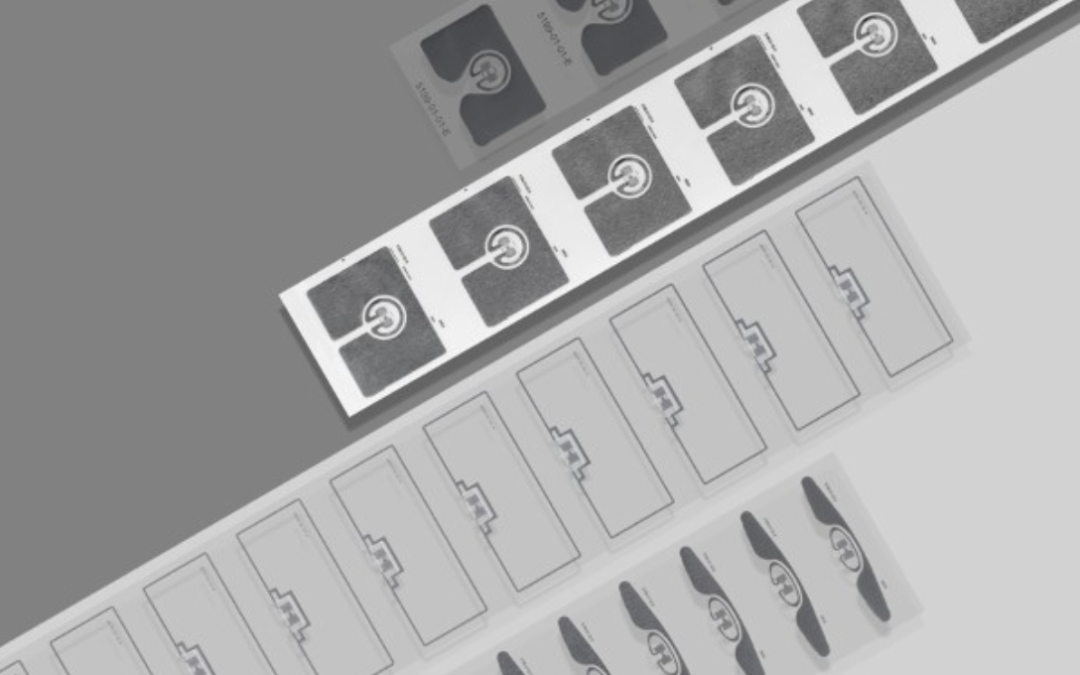
Avery Dennison has launched its AD IdentiFresh inlay series, which is said to advance the use of RFID technology in fresh food categories like bakery, meat, deli and produce. The proprietary set of inlays is part of Avery Dennison’s Optica Food Solutions. Real-time inventory visibility is reportedly transforming fresh management to help food retailers and suppliers improve operational efficiency, enhance freshness, and reduce waste.
The launch of the AD IdentiFresh inlay series marks a breakthrough in RFID technology, the company stated. The launch follows the news of Avery Dennison’s collaborations in the food sector with Walmart and Kroger. Avery Dennison’s proprietary antenna design and inlay construction overcome key operational challenges in the food retail environment. The product helps improve read performance on densely stacked items, particularly within high-moisture cold environments like meat cases.
The AD IdentiFresh series leverages Impinj’s M800 series endpoint integrated circuits (ICs) and, when combined with the latest Gen2X enhancement, further improves readability and speed. The compact inlay form factor is designed to fit easily within existing label formats, enabling seamless integration with current workflows and labeling equipment, minimizing operational disruption. The AD IdentiFresh inlay series enables both in-store and supplier tagging of fresh food items, offering flexibility and high-volume scalability.
The growing uptake of robust RFID tagging solutions comes at a time when there is heightened focus on improving visibility and reducing waste across the industry.
New research commissioned by Avery Dennison highlights how decision makers are consistently challenged at various points throughout the food supply chain, most specifically across perishables.
When 3,500 global food retailers and supply chain leaders were asked to identify the three most difficult categories for waste, 50 percent pointed to meat, 45 percent cited produce, and 28% mentioned baked goods. Over half (51 percent) said that inventory management and overstocking contribute significantly to food waste within their operations.
The Making the Invisible Visible: Unlocking the Hidden Value of Food Waste to Drive Growth and Profitability report also includes independent modeling warning that the economic cost of food waste across the global supply chain is forecast to reach $540 billion by 2026, up from $526 billion last year.